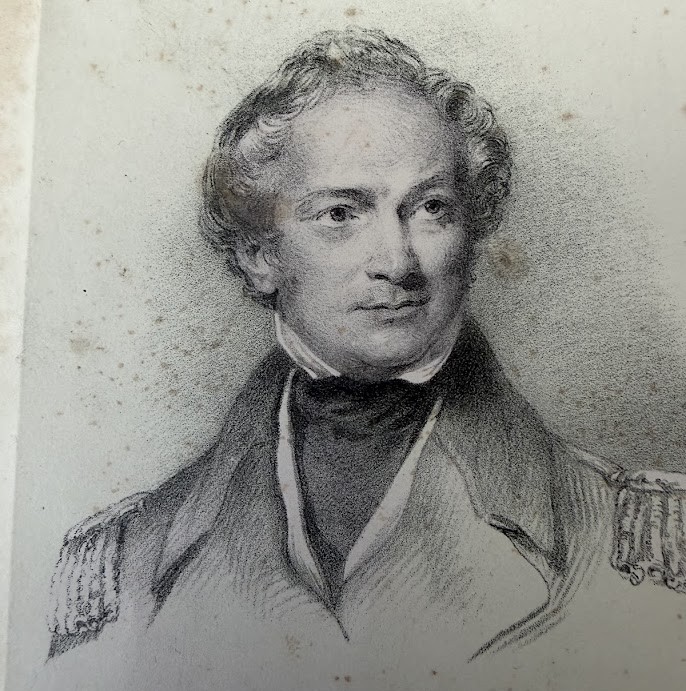
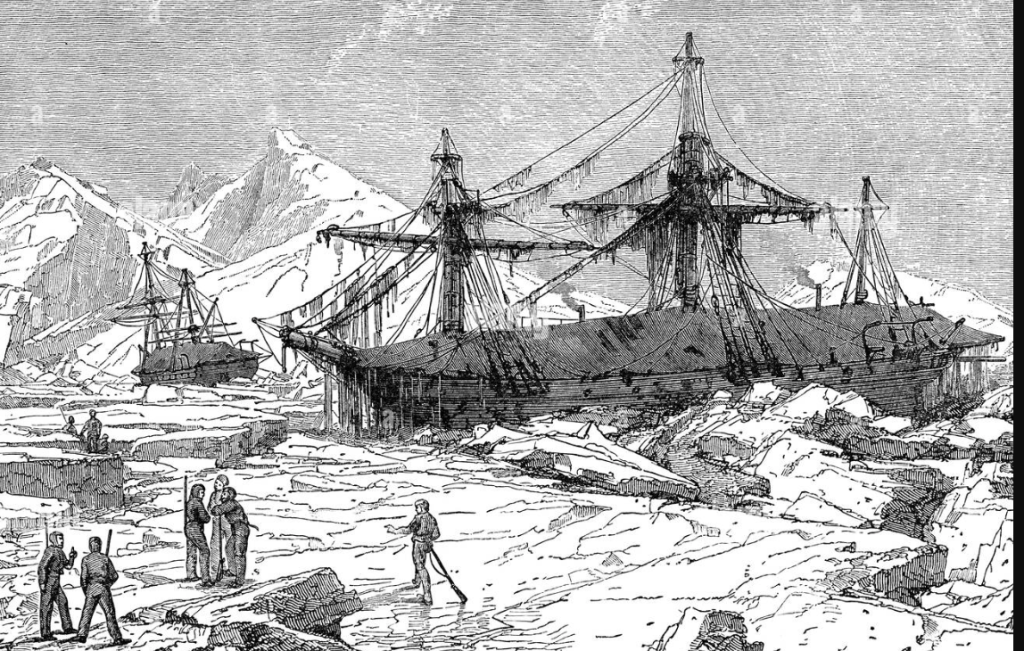
My wife’s ancestor, the arctic explorer Sir William Edward Parry, is best known for a 1819-20 voyage that took him three-quarters of the way across the Canadian Arctic Archipelago. It is said to be the single most productive voyage in the quest for the Northwest Passage until that mission was finally completed by Roald Amundsen in 1906. Parry’s two ships and his 29-man crew were frozen in ice for 10 months, which included three months of total darkness; in the new year, temperatures dropped to −54 °F (−48 °C). The portrait of Parry by R J Lane, is from Memoirs of Rear-Admiral Sir W. Edward Parry, by his son, The Rev. Edward Parry, (Longman, Brown, Green, Longman & Roberts, 1857).
Parry demonstrated masterful teambuilding skills. He connected deeply with his crew. Rather than relying solely on traditional naval authoritarianism, he fostered a cooperative environment, intellectual engagement, and collaborative community building to stave off hopelessness. He preserved the morale of his men with strict routines – such as regular exercise, while the officers put on plays and produced a newspaper. He also grew over 100 pounds of mustard and cress to protect the crew from scurvy.
Fast forward to the present day: A common observation of the FIFA World Cup 2026 Champions Spain is that they played as a team. While they had many talented players, the focus was not on one individual. They worked with technical precision and cohesive teamwork that did not rely on an individual star. The winning goal in the final was scored by a substitute. As Sam Marsden wrote on ESPN, “There is no country where the coaching, player pathways and tactics are so aligned and intertwined.” Much credit must go to Luis de la Fuente and his focus on group harmony, selflessness, and shared responsibility.
Teambuilding is the most neglected part of so many worthwhile enterprises. How many initiatives implode due to jealousies, hurt feelings, too much reliance on one charismatic figure, or lack of clearly defined roles or responsibilities? My friend and colleague Rev. Sylvester “Tee” Turner often said, “Movements don’t fail from outside; they fail from inside.”
Teambuilding is hard, even among people working for the same cause. I recall a conversation with Ron Kraybill who has spent decades as a mediator, group facilitator, and trainer in peacebuilding. He remarked that some of the worst conflicts occur between people in the peacebuilding community. According to Craig Bowman, futurist and publisher of The Social Prophet, the majority of civil society, nonprofit and international advocacy organizations report significant internal conflicts, yet very few have effective conflict-resolution systems in place. He notes, “The biggest threat to civil society right now is not what the government will do. It’s what nonprofits and foundations are doing to themselves.”
Those who build coalitions in efforts to address unjust systems and practices can expect to find among themselves the same tensions, prejudices, and fears as in the communities they hope to impact. As I wrote in Trustbuilding: “Sometimes people are not prepared for the difficulties and disappointments they encounter in working with people with whom they thought they shared a common vision of community. It is often easier to love the dream than the actual people we are asked to work with. Because they will disappoint and even hurt one another, the members of the core group must practice the art of forgiveness.”
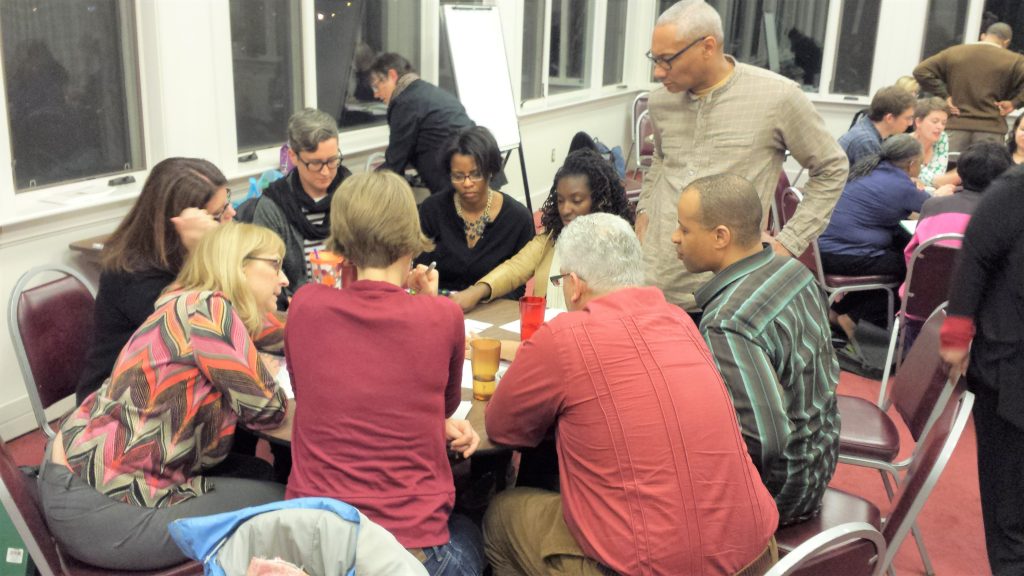
Teams need a variety of qualities. Teams are built through a combination of vision, courage, honesty, humility, tenacity, creativity, unselfishness, humor, reliability and flexibility. And effective teams need a range of skills and aptitudes ranging from managers to nurturers. Team leaders need to ask themselves: How do I deal with conflict? Am I comfortable with contradictory points of view? What work styles in others challenge me? Do I create an environment that welcomes diversity? How transparent am I in a leadership position? Am I willing to be vulnerable?
During the American Civil War, Abraham Lincoln famously built a “Team of Rivals”. He appointed his main political opponents, Salmon P. Chase and William H. Seward, to his wartime cabinet. Rather than surrounding himself with “yes-men,” he welcomed diverse perspectives and was able to manage deep interpersonal conflicts.
Teambuilding does not mean avoiding conflict. Sometimes it is necessary. My most difficult moment as a leader was having to tell a gifted and visionary person, with whom I had worked for a decade, that a particular pattern of behavior was causing unacceptable harm to our team. The parting was painful and for two years we had no contact; the feelings were too raw. And then, by an act of grace, the relationship was restored. Although we no longer worked together, we found that the friendship and respect we had for one another was still intact and in some ways had grown stronger.
Teams working effectively for transformative social change today must build collaborative networks that transcend the usual boundaries and are deeply rooted in open dialogue, acts of acknowledgment and reconciliation, and in relationships of trust.
*Portrait of William Edward Parry by R J Lane, from Memoirs of Rear-Admiral Sir W. Edward Parry, by his son, The Rev. Edward Parry, (Longman, Brown, Green, Longman & Roberts, 1857).