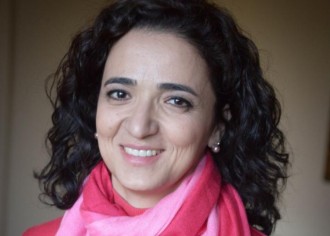
A special guest commentary by Dr Wadiaa Khoury, lecturer and researcher at the Faculties of Education at Saint Joseph University (USJ) and Lebanese University (LU), senior project coordinator with Tempus Euro-Med project, and founder of TASC (Teachers as Agents of Social Change)
When people think of Lebanon, they often think of conflict. Many fail to see that Lebanon has repeatedly become the stage on which the ambitions and rivalries of others are played out. Ours is a small country trapped between competing regional and international powers. The recent war reminded us, once again, that while geopolitical actors negotiate strategies and spheres of influence, ordinary people pay the price: destroyed homes, broken communities, lost livelihoods, and another generation asked to rebuild again and again.
As Lebanese, however, we must also be honest with ourselves. We cannot blame others without also acknowledging our responsibility. Many Lebanese were deeply angered and disappointed that Hezbollah’s decision to open a new front gave Israel the justification—whether one accepts that justification or not—to launch another devastating military campaign. Yet the reality is complex. The communities that support Hezbollah – mostly Shia Muslims – are also communities that lived through decades of occupation, repeated invasions, and profound insecurity. Their history has shaped their fears and choices. Understanding that history does not mean endorsing every decision taken in its name; it simply reminds us that sustainable peace can never be built on simplistic narratives.
But Lebanon’s recent disasters – from economic crisis, to the Beirut port explosion, to the two recent devastating wars where technology was used to kill and destroy – raises a larger question confronting humanity. Can we continue to accept a world where the destiny of entire peoples is determined primarily by the calculations of military power, geopolitical competition, and economic interests? Can human lives continue to be treated as variables in someone else’s strategic equation?
I believe the balance of power that our century needs is no longer between competing hegemonies. We need to choose between two radically different visions of humanity: one that instrumentalizes people in the pursuit of power, security, territory, or profit, and another that places human dignity, justice, solidarity, and the sanctity of every human life at the centre of political and economic decision-making.
This is why I found the recent encyclical Magnifica Humanitas of Pope Leo XIV particularly meaningful. Although it speaks about artificial intelligence, its deeper message is profoundly human. It reminds us that technology, politics, and economics are never ends in themselves. They must always serve the human person and the common good. It also challenges us to move beyond seeing war as a normal instrument of politics. Instead of constantly asking, “When is war justified?”, it asks a more courageous question: “How can war be prevented?” It calls for dialogue before confrontation, for international cooperation before domination, and for moral responsibility that can never be delegated to machines, to institutions, or to anonymous systems of power.
If there is hope, it will not come only from governments or international organizations. It will come from what we call a coalition of conscience: people from different faiths, cultures, professions, and nations who refuse to accept that human beings are collateral damage in the pursuit of power. Educators, religious leaders, civil society organizations, responsible businesses, and ordinary citizens all have a role to play in creating a different moral balance in the world.
The question is no longer whether such a coalition is necessary. Lebanon, Ukraine, Gaza, Sudan, and so many other places have already answered that question for us. The real question is whether we have the courage to build it across our differences, to sustain it when it is inconvenient, and to give it enough moral authority that conscience itself becomes a force capable of challenging domination.
If power alone continues to shape history, tragedies will continue. But if conscience can organize itself with the same determination as power does, then humanity can begin to write a different future.
Is a coalition of conscience possible? I see some hopeful steps in my own country.
In 2022 Lebanon’s Assembly of Catholic Patriarchs and Bishops took a bold step. They invited all of our religious and political leaders to join them in working for the “purification of memory for the sake of national reconciliation”. This means creating safe spaces where people who carry the mental wounds of war can share their experience, listen to others, and thereby gain new perspective on what they went through, as a step towards healing.
During Pope Leo’s visit to Lebanon in 2025, there was a special emphasis on this process, especially during his meeting with officials at the presidential Palace, and during an ecumenical meeting of leaders from 16 of Lebanon’s 18 religious communities.
TASC (Teachers as Agents of Social Change), which was inspired by Initiatives of Change (IofC), is working in many schools to build understanding and trust across differences of religion and culture, and we were asked to help develop these events. Both the Vatican and the Assembly of Catholic Patriarchs and Bishops heeded our proposals, and they were implemented in both events.
TASC is a growing network, now including 70 teachers. We meet weekly, have kept meeting throughout the war, and are partnering with other NGOs. Together we recently wrote a “National Education Strategy for Social Cohesion” for the Ministry of Education and Higher Education. This will be included in the new school curriculum, and will deepen our work for social cohesion. Working collaboratively is a constant challenge, but we continue, despite all difficulties, in the hope that our joint efforts will develop into a coalition of conscience which brings us together as a nation across all our divisions.
The challenge we face is how to: 1) Collaborate amidst an individualistic culture, 2) Draw on international experience despite local barriers, and 3) Exchange expertise across countries.