
The World Cup is a dramatic visual demonstration of the increasing diversity of international football – and our countries. Former colonies are holding their own against former colonizing nations. The gap between elite teams and underdogs is shrinking. Lower-ranked teams are sometimes dominating highly favored squads. The day before I wrote this, Paraguay eliminated four-time title holder Germany, and Morocco beat the Netherlands! The great hero is Cabo Verde, an archipelago off the coast of West Africa, population 529,000, and ranked 63rd, which achieved a 0-0 draw with Spain and 2-2 with Uruguay, before finally falling 2-3 to Argentina.

Migration is playing a major role. Top clubs in Portugal, Germany, Netherlands, France, the UK, Brazil, and Argentina draw players from across the world. Almost 25% of World Cup players (290) represent a country different from their place of birth. The Democratic Republic of Congo has 20 foreign-based players born in a range of European countries, including Belgium, England, France, and Switzerland. Roughly half of the French national roster have roots spanning across Africa. Canada’s team reflects a new picture of national identity, embodying stories of immigration, a global melting pot.
Across the country, immigrant diasporas and fans from around the world have packed restaurants, living rooms and concert venues. Some smaller US cities have given generous hospitality. Lawrence, Kansas, went viral with its welcome of the Algerian team; locals learned phrases in Arabic and French and opened their hearts and homes to visiting fans. The New York Times call the tournament a “life-affirming marvel of collective effervescence.”
In another more sobering sign of new realities, countries with powerful militaries like the USA and Russia are discovering the limits of that power. The first six days of the massive attack on Iran involved 155 aircraft, including 64 fighter jets, four bombers, 48 refueling tankers, 13 rescue aircraft, and 26 intelligence/jamming aircraft. It also required multiple special operations teams. According to the Department of Defense, those few days alone cost about $11.3 billion. But the Iranian leaders killed have been replaced by others who appear even more hardline. And the USA was totally unprepared for Iran’s closure of the Strait of Hormuz. Ukrainian drones, produced cheaply, are causing severe damage far inside Russia. Ukraine is even showing the USA how to build and use them. The U.S. military is adapting to battlefield lessons from Ukraine, and the Pentagon is acquiring Ukrainian-developed technology to overcome GPS jamming and scale up U.S. drone production.
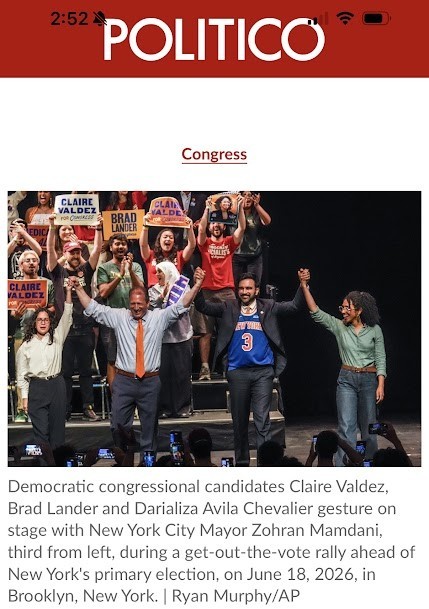
A political shift is appearing in the USA as younger Americans are increasingly impatient with members of Congress in their 70s and 80s. Currently, 120 members are older than 70 and twenty-four are 80 or older. The median age is 64. In elections this month, Politico reports: “A trio of hard-left Democrats who won House primaries in New York City boast among them eight protest-related arrests, three endorsements from Mayor Zohran Mamdani, two Democratic Socialists of America memberships, an average age of 41 and just one commitment to vote for Jeffries [the current Speaker] as the next speaker.” In Colorado, a 29-year-old democratic socialist unseated a 15-term incumbent.
If Democrats win even a slim majority in November, these progressives could wield considerable power. In Colorado, a 29-year-old democratic socialist unseated a 15-term incumbent. Of course, Republicans are eagerly looking forward to painting Democratic opponents as Marxists. But this tired description may not gain much traction in a climate of widespread anger at exorbitant corporate profits, lack of access to affordable health care, and a housing market that makes home ownership almost impossible for a generation of people earning less than about $120,000/year compared with $60-$70,000 twenty years ago.
Even in the state of Texas, which has not elected a Democrat to a statewide office since 1994, James Talarico, a 36-year old state representative and seminarian, is gaining wide publicity and considerable funding support as he campaigns for US Senate with a message of progressive Christianity. He is winning 61% of Hispanic voters who put a high value on faith and family life, a significant swing from the last election when Trump won 55%.
Some hopeful news as America celebrates its 250th birthday. In a surprise to many, two new major studies reveal that the vast majority of Americans are building meaningful relationships across racial lines. The Brookings Institution’s “Interracial Cooperation in the United States” report and the National Collaborative for Health Equity’s (NCHE) 3rd Annual Heart of America Survey, offer “a powerful counter-narrative to cynicism about race relations in the U.S. While structural barriers remain, the data show Americans are increasingly building common ground and fostering societal cooperation.” The vast majority work alongside colleagues of different races; 72% have at least one friend of a different race; and 35% of adults under 30 are in interracial romantic relationships. According to the report, “87% of U.S. adults state that race is not a factor in their business decisions, and 83% say the same for selecting friends. Instead of racial identity, Americans are prioritizing traits that are contextually relevant, such as shared values, reputation, and qualifications.”
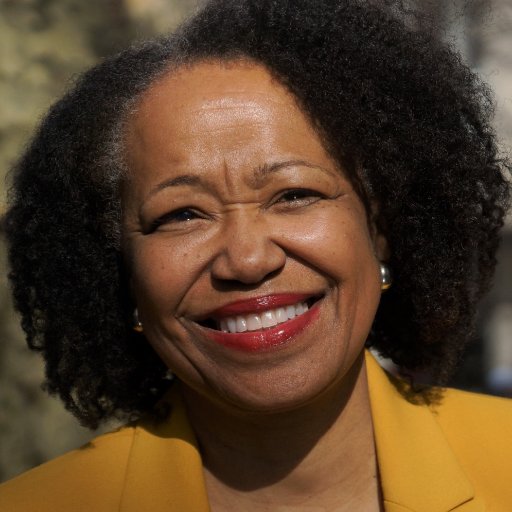
A resilient spirit and hunger for healing Complementing the behavioral data from Brookings, the NCHE’s 3rd Annual Heart of America Survey captures the emotional and aspirational pulse of the nation, “revealing a citizenry that is tired of division and hungry for healing.” It found that 76% of Americans “believe they can overcome challenges through shared understanding, and 72% take pride in their identity as an American, reflecting a widespread sense of unity and hope for a more cohesive society.” NCHE executive director, Dr Gail Christopher, writes: “Beneath the divisive political rhetoric and social media echo chambers, a far more profound story is unfolding in communities across the country. Respondents in the annual Heart of America survey have revealed a nation grappling with profound challenges, but also one brimming with a resilient spirit, a surprising yearning for unity, and a quiet, yet powerful, recommitment to the very principles and values that America was founded on.”
History does not stand still. In the words of Bob Dylan, “the times they are a-changin.”