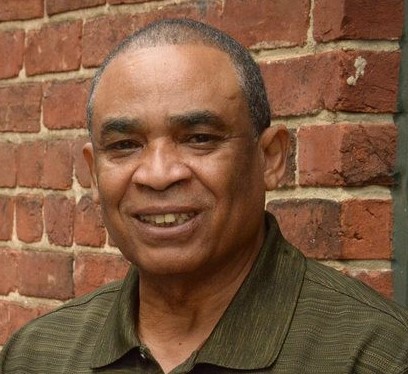
It’s with a mixture of grief and gratitude that we mark the passing of Rev. Sylvester “Tee” Turner. A man of vision and steadfast faith, he was a founding pillar of the Hope in the Cities movement and played a leading role in helping Richmond, Virginia come to terms with its racial history. For more than 30 years he was my colleague and trusted friend. He conducted the marriage ceremony for our youngest son Andrew and his fiancée Kate.
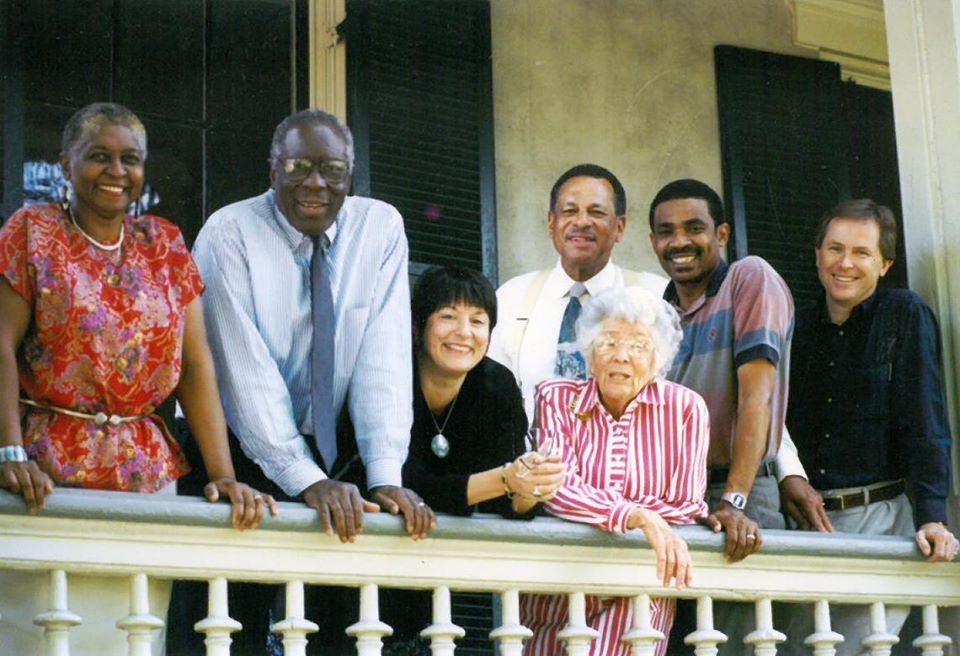
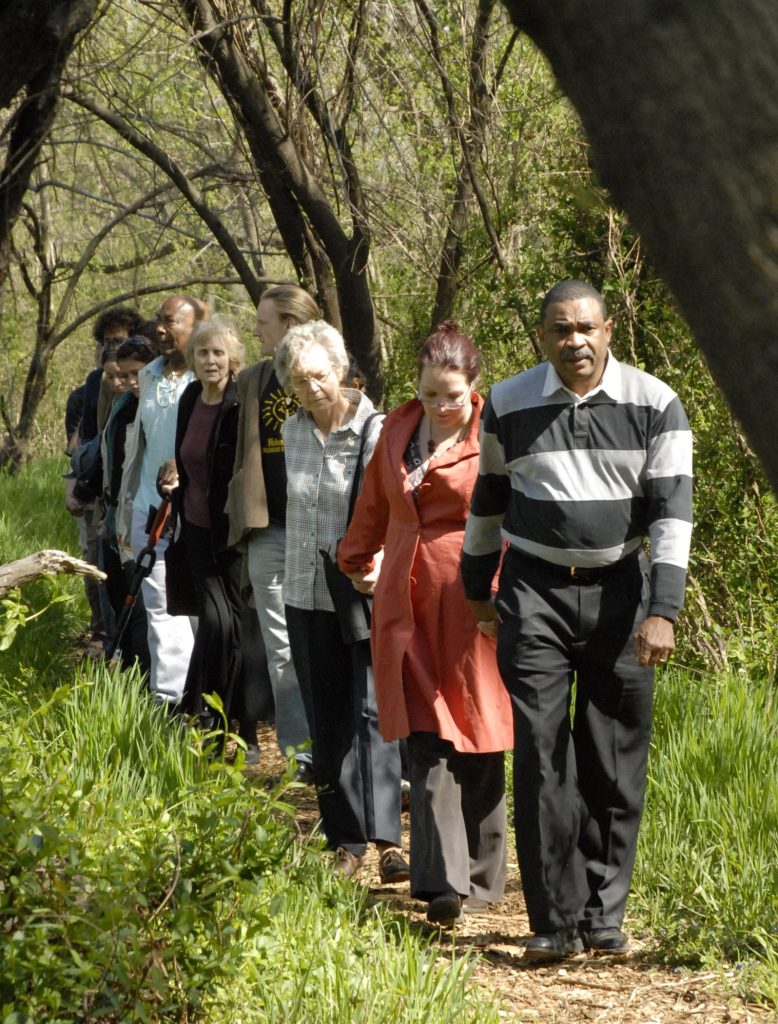
Tee grew up in Richmond in Gilpin Court, a majority Black neighborhood with one of the highest poverty rates in the country. After a career in the US Air Force, he returned to Richmond in the 1980s. Having become an ordained minister, Tee wanted to serve the community where he came from. He became the director of the Peter Paul Development Center, an organization designed to provide family services to Church Hill residents in east Richmond, but after heading this operation for a few years he realized the limitation of working within Black communities exclusively. He met the Reverend Benjamin P. Campbell, an Episcopal priest, the founder of the Richmond Hill retreat center which was to become a major resource for racial healing and spiritual renewal. Marvin Chiles writes in The Struggle for Change how Tee, at the time, “did not trust most white people beyond where he could see them.” However, he and Ben became firm friends and were to become inspirational figures in a revolutionary movement for Richmond to acknowledge its racial history. Campbell introduced him to the Initiatives of Change team (then called Moral Re-Armament) which was starting some work focused on honest conversation and racial healing. In 1993, Tee and Ben were leaders of the team that designed the city’s first walk through its racial history, the centerpiece of the Healing the Heart of America conference.
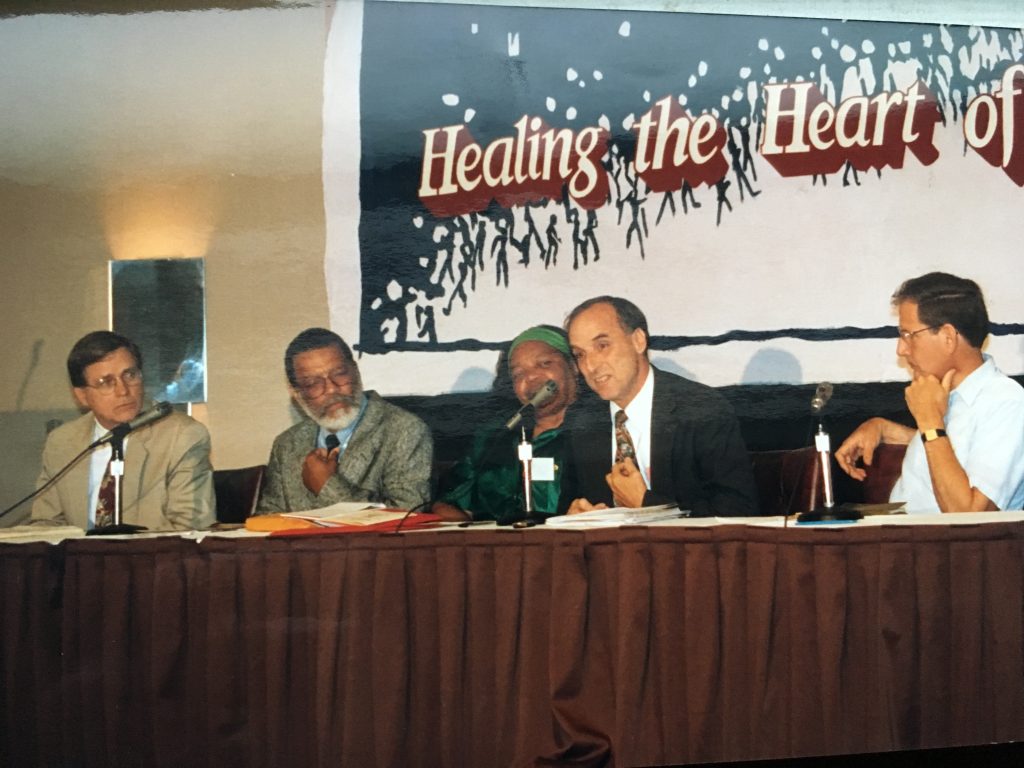
Ben writes, “For more than three decades, Tee worked actively for racial justice in Richmond, the former Capital of the Confederacy. His integrity, his wisdom, and his kindness have provided a steady support for the telling of truth in this city. His dedication to the building of a national slavery museum in Shockoe Bottom (the site of the former slave market) has been unwavering. There was a clarity in Tee’s wisdom, based on faith, self-knowledge, and a dedication to truth.” Over the decades, hundreds of persons of all races and backgrounds and from many countries were led by Tee on the historic Trail of Enslaved Africans and were given the gift of his vision.
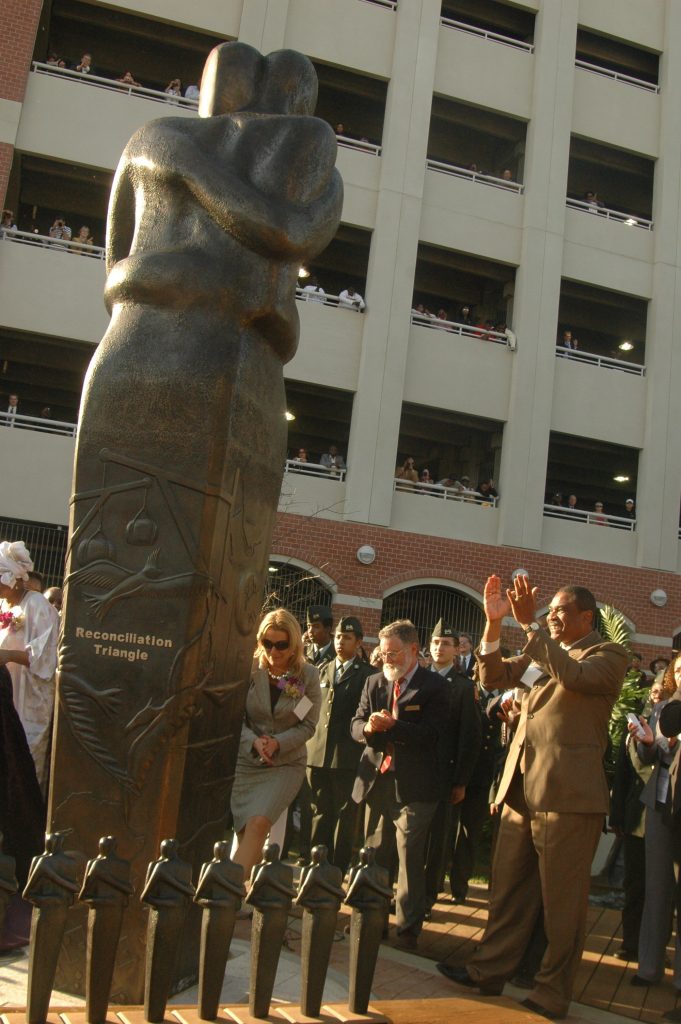
Delegate Delores L. McQuinn who represents the 81st District in Virginia’s House of Delegates writes: “It is with great sadness that I share the passing of my dear friend, historian, trailblazer, and icon in the Commonwealth of Virginia, Rev. Sylvester “Tee” Turner. Rev. Turner was a permanent fixture in the Richmond Metropolitan Area, and his deep knowledge of its rich and complex history was truly unmatched. He generously shared his knowledge about history with everyone he met, always ensuring that buried history was preserved and honored.
“As Co-Founder and Treasurer of the Shockoe Legacy Foundation, formerly the National Slavery Museum Foundation, Rev. Turner was instrumental in the success and growth of the organization from its very beginning. His unwavering commitment to truth-telling, historical justice, healing and reconciliation would empower and shape the community in understanding the mission and vision of the Foundation in profound ways. Beyond his titles and achievements, Rev. Turner was a trusted colleague, a wise counselor, Pastor of Pilgrim Baptist Church, a board member of Virginians for Reconciliation and a faithful servant whose legacy will continue to guide our work and inspire future generations. He will be deeply missed, but his impact will never be forgotten.”
Karen Elliott Greisdorf is a photographer and documentary filmmaker in Massachusetts who recorded Richmond’s first history walk. She writes, “I am in tears of deep grief and gratitude. During one of my first interviews with Tee in 1993, he stood at the base of the monument to the Confederate Soldiers in Libby Hill Park and seeded in me a belief in the power of narrative change to shift perspective…. a lesson which has informed my work across the following decades.” In the interview Tee says, “When I first saw the monument I saw pain, the pain that I had suffered as a Black man, as a Black person, the pain that my ancestors had experienced. And that’s when I realized that I needed to be healed also. The pain taught me that I had not come as far as I thought I had come in my reconciliation with the problem of race. But then I began to look at it from the perspective of grief, because the ancestors of the Confederates who built it out of grief. They need to be healed as well.” See Healing the Heart of America
Karen also recalls how he was “just a quiet force alongside us all. I remember the time I left a lunch appointment with someone who strongly challenged a work proposal and I found myself calling Tee pretty distressed. He talked it through with me, helped me right the ship and encouraged me to remain true to my conviction. My southern older brother will always continue to guide me as I hold the flame out front to walk through our nation’s history now in New England.”
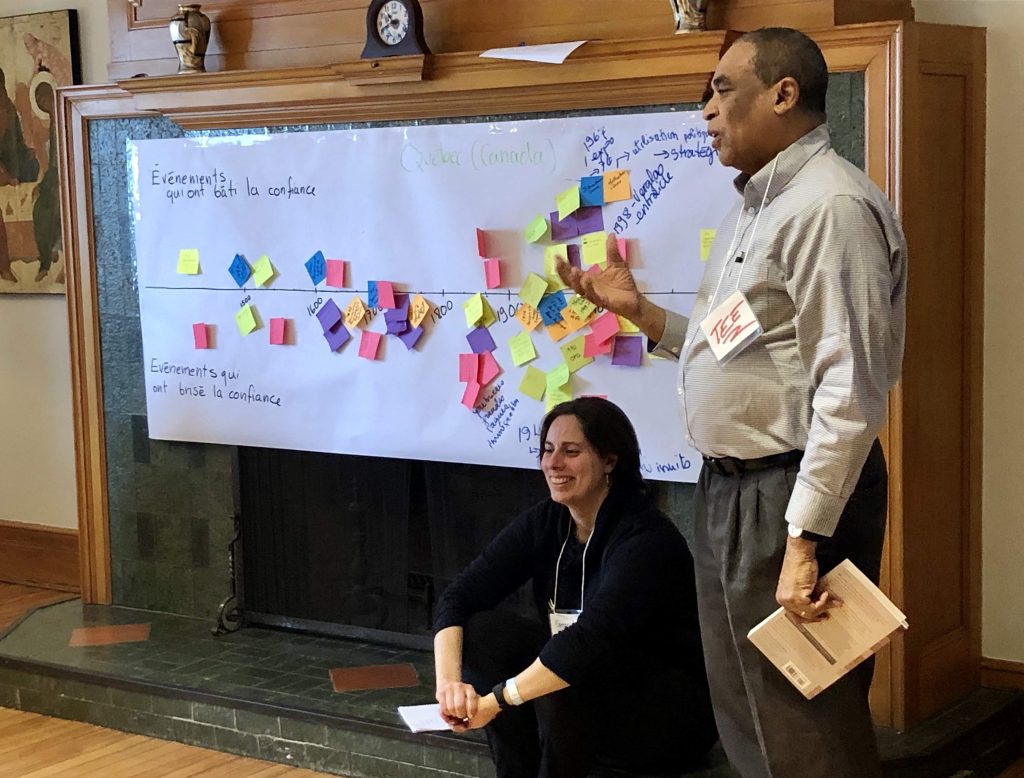
I traveled with Tee to facilitate workshops across the USA from Mississippi to California and around the world from Europe to Australia. Tee met with community leaders in South Africa. He was a trainer with IofC International’s Trustbuilding Program. In Quebec, he and I facilitated a retreat with a diverse group including anglophones and francophones, a First Nations elder, and immigrants from around the world). Together, we explored issues of history, identity and the role of the individual in building trust. This short video offers a thought-provoking presentation of his approach to reconciliation which he describes as a process of acknowledgment and apology; forgiveness; and accountability and working together.
There is not enough space to write about all the many ways in which Tee impacted people and communities, but here are just a few of the many tributes that I have seen:
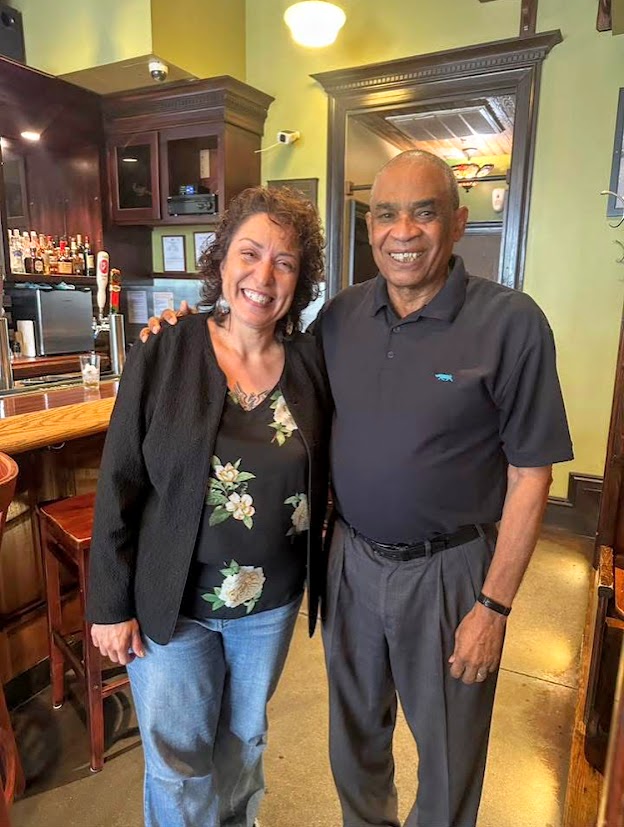
Tanya Gonzalez has served in city government and as the highly respected director the Sacred Heart Center which since 1990 has stood as a vibrant hub of hope and opportunity for Latino families in Richmond. “I first met Tee in 2003 and that started a 20-year journey of each of us learning about the other’s communities and cultures. Our conversations often centered on Black and Brown solidarity and what that could be and look like in Richmond. He continued supporting me in my various leadership roles that I have had over these last decades. Without fail, he would text me every few months to check in on me and take me to lunch. Our last lunch was in July 2025. I said to him, ‘Tee, in our decades of friendship, we haven’t taken a photo together.’ He cracked some joke that I can’t remember now, and then accepted taking a photo with me.”
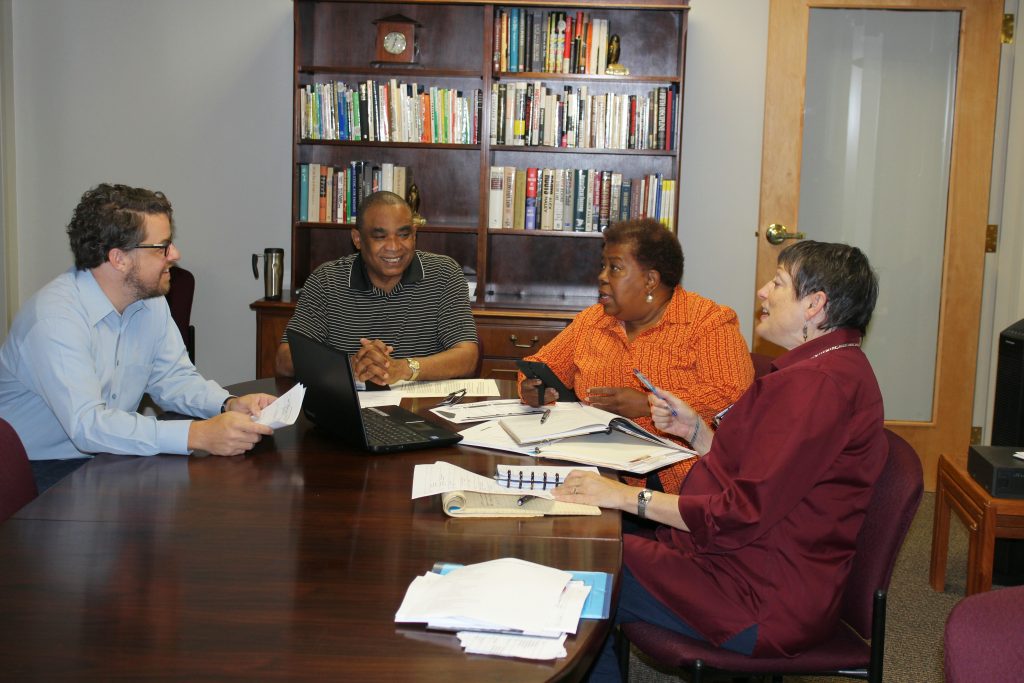
Elnora Allen, a spiritual director, speaks for many when she writes that Tee was “a great man whose soul was anchored in love of community and peacebuilding… He constantly answered his call to bridge divides, bring understanding and calm to any situation, and offer up who he was to you when you needed it…he has left a permanent mark on my heart and spirit.”
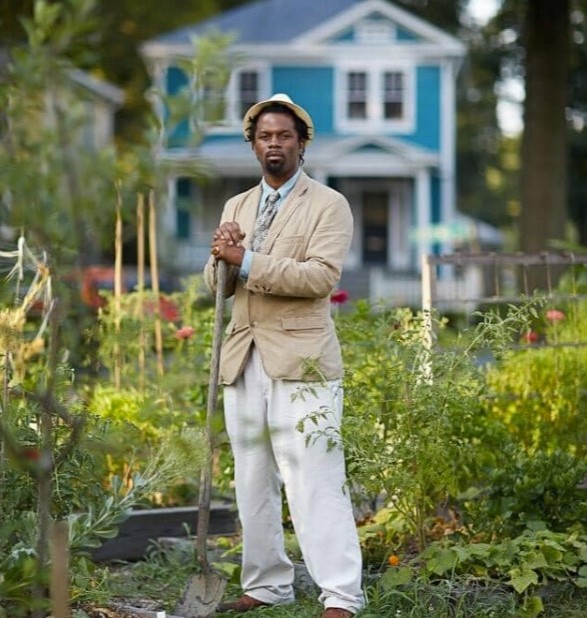
Duron Chavis, who gained prominence as an urban gardener with a passion for food justice, took part in IofC’s Community Trustbuilding Fellowship (CTF) at Richmond Hill when Tee was a facilitator. “I told him I was taking part because I felt the limits of doing racial justice work solely in the Black community. I felt I needed to build bridges across communities to really change the system …CTF prepared me to work at an all-white wealthy non-profit in ways I didn’t calculate beforehand. Learning how to communicate difficult truths, rooted in history and affirmed by my ancestors, allowed me to work in that space and reallocate resources into the community… We [the community] now own acres of land, continue to train and continue to build forward for racial equity and justice – remembering that this is a marathon not a sprint. I am thankful for Black men like Tee who saw me in my brashness, who held space for me and provided wise counsel as I have evolved in this work. These are the unsung heroes of this work, the ones who operate behind the scenes, who reach out to the younger generation to lift them up and put them in position to do what they have been called to do.”
Leslie Little, another CTF participant, writes about her experiences of being on a history walk with Tee. “There are times when you know you are in the presence of giants. On that day in February 2018, listening to Reverend Tee share the history of the Trail of Enslaved Africans and Richmond’s Reconciliation Statue, I had no doubt that this was a man who was transmitting deep wisdom and it was time to listen.”
Andrew Schoeneman, an associate professor and chair of nonprofit studies at the University of Richmond sums it up: “Tee was and remains a beacon. Of hope, persistence, grace, love. Of everything we want in our communities.”
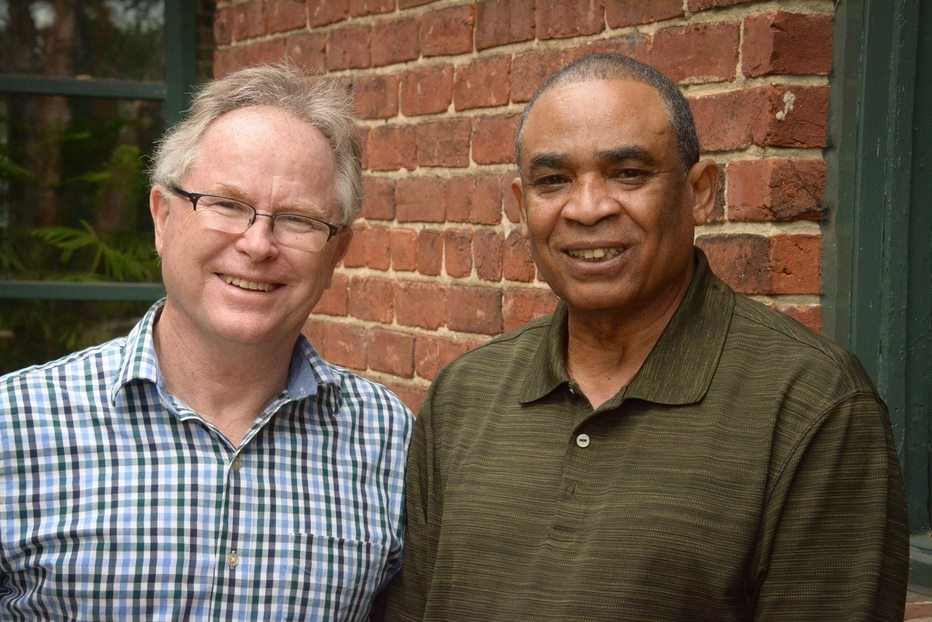
Tee understood the importance of long-term commitment. He said about his work with the Shockoe Legacy Foundation: “This is a testament to being consistent about preserving the history of those that were enslaved. It’s a fulfillment of every responsibility that I have, our country and our city has, in bringing healing. It’s about us being consistent and doing the work of racial reconciliation. It isn’t a quick fix, it’s a journey you have to stay on.”
Ben Campbell recalls: “Last week at an all-day meeting planning for the Shockoe Project and the National Slavery Museum, a colleague said that the dedication of years reminded her of a hymn she had known from childhood: ‘May the work I’ve done speak for me.’ Tee nodded in agreement to her words. I looked at him and knew the words were true to his lifelong prayer and commitment. A week later he died.”
Dr. Gail Christopher, the executive director of the National Collaborative for Health Equity, wrote to me, “I considered him a friend, colleague, and a kindred spirit in this important work. Sometimes I think our strongest spirits are choosing to leave this dimension during these pivotal moments so that they can work more effectively from the other side.”
Special thanks to Karen Elliott Greisdorf who collaborated on this and supplied several photos. For more about Tee’s work with Hope in the Cities see Trustbuilding: An Honest Conversation on Race, Reconciliation, and Responsibility by Corcoran