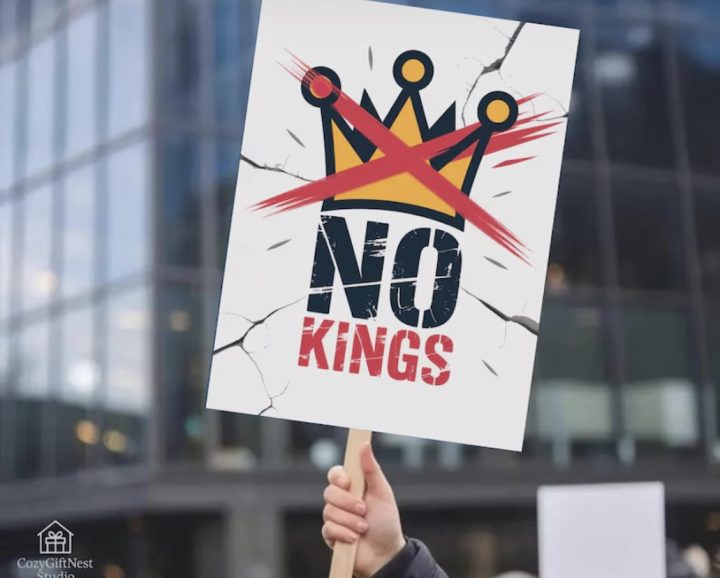
Today in the United States we face a growing gap between those with wealth and those struggling to make ends meet. There is an unprecedented assault on truth, the foundations of our democracy and the rule of law by those in power in Washington. At times such as this we may feel a compelling need to demonstrate against threats to civil rights, cruelty to immigrants essential to our economy, growing authoritarianism at home, and imperialism abroad. At times such as this it’s even more important to hold fast to purpose and core values.
My dad was a card-carrying trade unionist and member of the British Labour Party all his life. Born in 1913 in Greenock, Scotland, in a working class family, he left school at 14 to work as a message boy for a local store. At 16 he trained at a pattern making shop which made engines and boilers for the shipyards on the River Clyde. During the Great Depression, apprentices only worked one week a month. It was a time of fierce class warfare. The region was known as the Red Clyde.
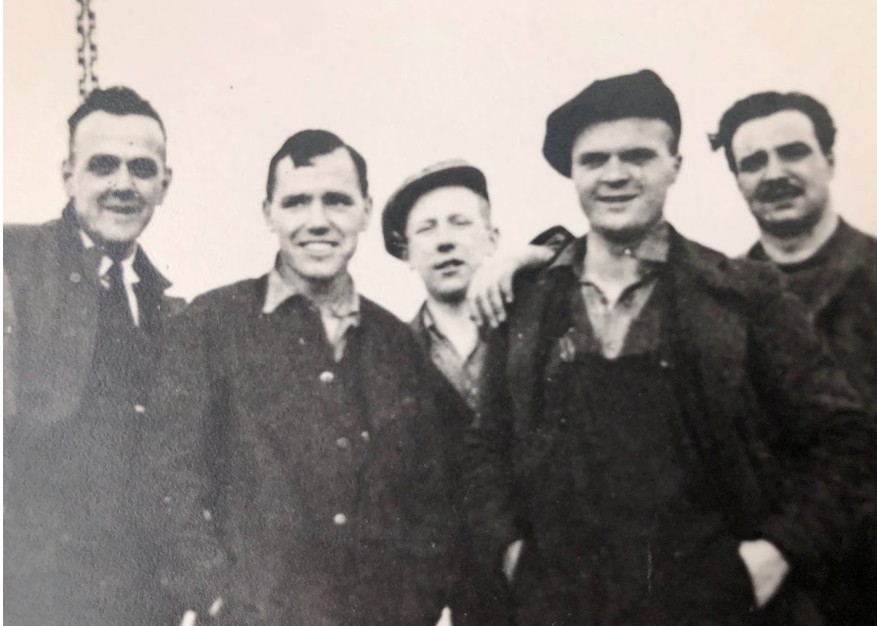
Dad could easily have been drawn to the Marxist ideology. But what caught his attention was not grand theories but some middle class students who had decided to take an honest look at their own lives as a first step in making positive changes in the world. One of them surprised Dad by apologizing to him for jealousy when he was selected as captain of the local badminton team. What surprised him even more was an introduction to three industrialists who were committed to putting the needs of people before profit. One decided to move into a smaller house during the Depression to avoid having to lay off any of his workforce. These industrialists and students all had life-changing experiences through the Oxford Group, now know as Initiatives of Change (IofC). This kind of demonstration of lived-out values and new priorities inspired Dad to devote the next 70 years bringing a new spirit to the international labor movement and to moving industrial relations beyond the concept of class war. He developed friendships with labor leaders on every continent.
I write in Trustbuilding, “Experience suggests that failure to root social justice efforts on the bedrock of a strong inner life and lived-out values can endanger the most idealistic efforts.” The Rev. Canon Robert G. Hetherington served for twenty-three years as our rector of St. Paul’s Episcopal Church in Richmond and was a key figure in that city’s efforts to confront it’s painful racial history. In one sermon he reflected on his experience with the Civil Rights movement. He was among the many students who rallied to Martin Luther King Jr.’s call to support the campaign for civil rights in Alabama. Up to fifty thousand came to the South to live and work with Black Americans for reconciliation and civil rights. “These were heady times,” recalls Hetherington. “But the forces of darkness were stronger than we imagined. We thought that if we worked harder, we would bring in the Kingdom of God. People got burned out. We stopped saying our prayers. We did not renew our spirits. There was a disconnect.”
In The Beloved Community, Charles Marsh argues that in its early years the Student Nonviolent Coordinating Committee (SNCC) possessed a distinctive radicalism that was “theological to the core.” The movement pursued a form of discipleship that was “life affirming, socially transformative, and existentially demanding: a theology for radicals.” Significantly, “A certain kind of contemplative discipline was an important disposition in building community and enabling trust.” Marsh believes that SNCC’s retreat from this spiritual basis after 1964 led to its ultimate collapse: “Compassionate action can never drift too far from its sources without forgetting purpose and mission.”
The Trustbuilding Manual that I compiled with Abigail Ballew in Richmond, Virginia is the essential training handbook for IofC’s global program led by teams working to build trust and heal trauma in areas of conflict in a dozen countries. It is rooted in the practice of regular times of inner listening and application of absolute moral standards. The Manual highlights key passages from my book Trustbuilding including this one:
Trust is a fragile bridge we build each day.
Honesty about our failures,
Purity in our motives,
Unselfishness in our support of others,
Love in our readiness to forgive and accept forgiveness.
These are building blocks of trust.
Trust depends on the authenticity of our lives, our openness, and our willingness to start with change in ourselves.
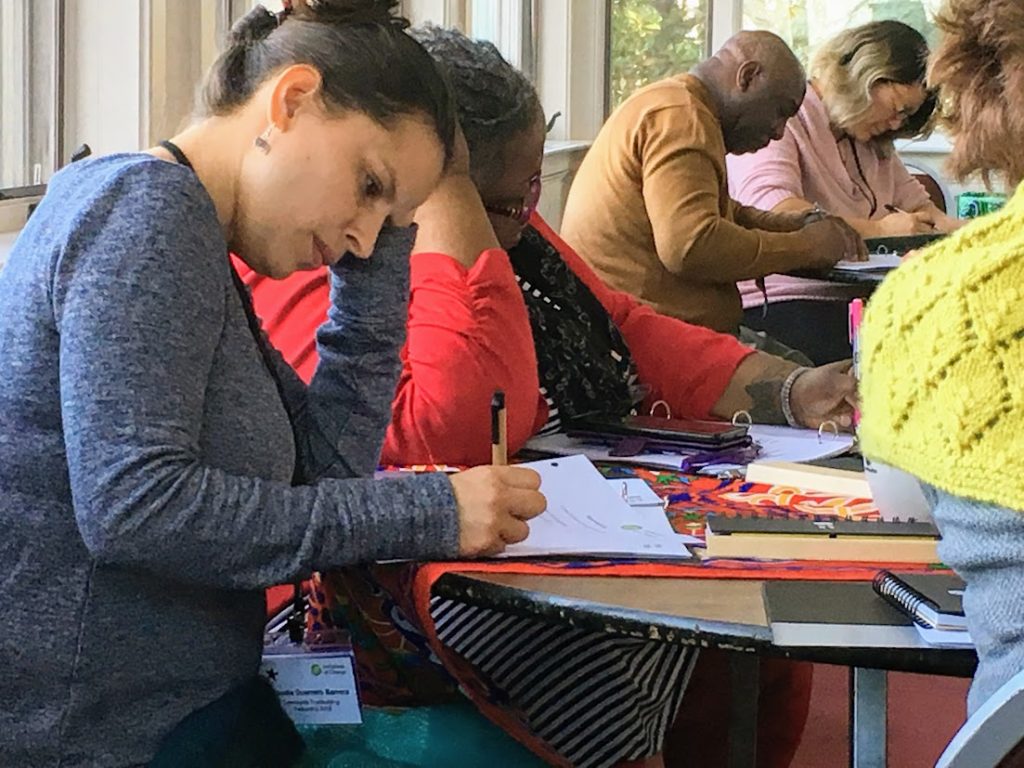
Audrey Burton, a Black civil rights organizer in Richmond, once spoke of her struggle to overcome the wounds of racism and exclusion, “Before, I would have written people off,” but by practicing these four absolute standards, “I can be around almost anyone and it doesn’t set off a time bomb.” She and her husband Collie created a welcoming space in their home where community organizers, business leaders and members of city government could share meals and talk honestly. It was the seedbed for the IofC Hope in the Cities campaign for “honest conversation on race, reconciliation, and responsibility”.
America has been my home for 45 years and I’m proud of my US citizenship. I am also convinced that this country urgently needs radical social and economic change, including a national health care system not based on corporate profit, college education that does not leave students with massive debt, affordable housing, free child care and early childhood education. Sadly, in recent decades both parties have lost touch with the realities of everyday life for vast numbers of Americans. This disconnect pushes the country further towards class war.
There is a ray of hope here in Texas. If James Talarico succeeds in defeating Senator John Cornyn in the November elections he will be the first Democrat to win statewide office in Texas in 30 years. His candidacy has excited large numbers of young voters and Hispanics. The primary recorded its highest-ever turnout for any primary for statewide office in the state’s history. Talarico is a 36-year-old state representative who attended seminary after Harvard. A column by David French in the New York Times described him as “a Christian X-Ray” because of “he is one of the few openly Christian politicians in the United States who acts like a Christian, and by acting like a Christian, he reveals a profound contrast with so many members of the MAGA Christian movement that’s dominated American political life for so long.” Talarico is urging Christians in public life to reclaim core principles such as helping the poor, showing compassion for immigrants and loving one’s neighbor. He is also challenging Democrats who for decades have largely shied away from speaking explicitly of their faith and applying core values to their actions and policies. Talarico shows that it is possible to stand for policies infused with justice, mercy and hope.
My Dad would have responded to Talarico. He sometimes talked of his early experience of Christians who “go to church on Sunday and exploit the workforce for the rest of the week.” What inspired him was not sermons or philosophy but authenticity. What moved Audrey and Collie Burton and many others in Richmond was the vision of a new world lived out by people of all races and classes that they saw in Initiatives of Change. What moved the city forward was not intellectual analysis or political correctness but people who had the courage to step out of their comfort zones and follow their inner voice of truth.
Today, America and the world stand at a crossroad. At times such as this, the daily quiet time and application of the four absolutes must continue to be the bedrock on which this remarkable global community is rooted.