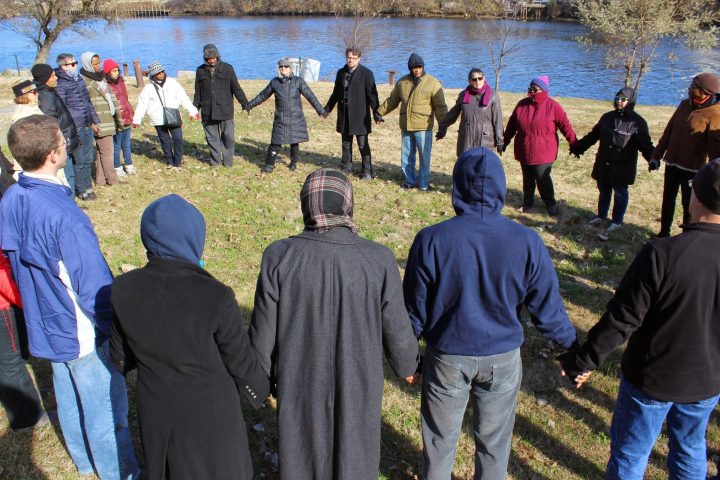
It’s no accident that my website heading is Trustbuilding: creating a space for change. Our goal is to create welcoming spaces where people can see themselves, others, and the challenges they face, in a new light. The act of welcome can allay fears and anxiety and open hearts and minds. A recent reflection reading quotes Henri Nouwen: “Hospitality is not to change people, but to offer them a space where change can take place.”
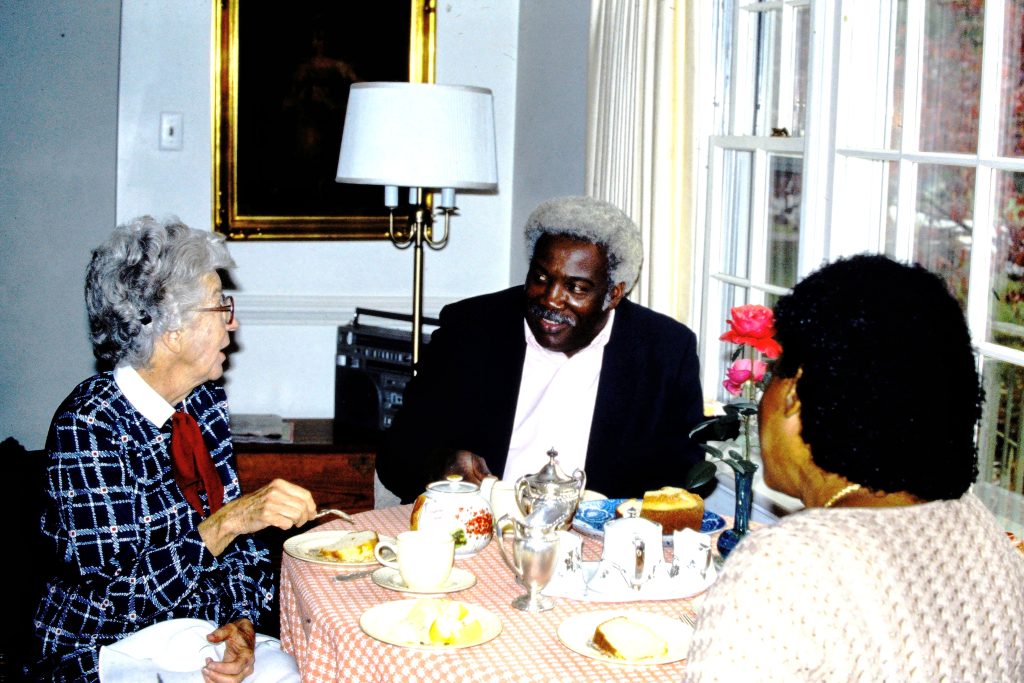
Hospitality has been a hallmark of the work of Initiatives of Change since its inception. In Richmond, Virginia, the first steps in racial healing began over potluck dinners as people opened their homes to others of different racial backgrounds – a new experience for many in that deeply segregated city. Cleiland Donnan was to become a leader of the emerging Hope in the Cities movement for honest conversation on race, reconciliation, and responsibility, but when she first invited Black Richmonders to her home, she felt it would be more acceptable to tell her neighbors that she was expecting some “African guests” since Black Richmonders usually only ventured to the West End as paid domestic help. But before long she was throwing regular parties for diverse groups. Sharing a meal together enabled people to let down their defenses.
Traveling together also created space for change. When a diverse Richmond group was invited to Liverpool UK, the experience of being together in a different context was transformational. The group came back as a team.
Our dialogues often began with an invitation to participants to talk about the neighborhood in which their parents or grandparents grew up or a food that is important in their family or community. Everyone has a story and people are often very happy to talk about a memory of their childhood or a tradition that is central to their identity.
Hospitality is a place where people are welcomed as valued fellow members of the human family. Nothing is more important in today’s world where we are constantly bombarded by a social media that attacks and drives us apart. As Dr. Gail Christopher, the executive director of the National Collaborative for Health Equity (NCHE), writes in Washington Monthly, “Our shared humanity is our greatest strength.” She notes that even in the darkest moments of our history, in the days of slavery and civil war, the “dominant narrative of oppression often overshadows another truth: a collaborative spirit and shared purpose that transcended racial lines…The hierarchy of human value, this fallacy that fuels racial hatred, was never universally accepted—then or now—and neither was the irrational fear of the perceived other. As we look for lessons from the past to apply today, one is that appreciation for human connection existed across races and still does today.”
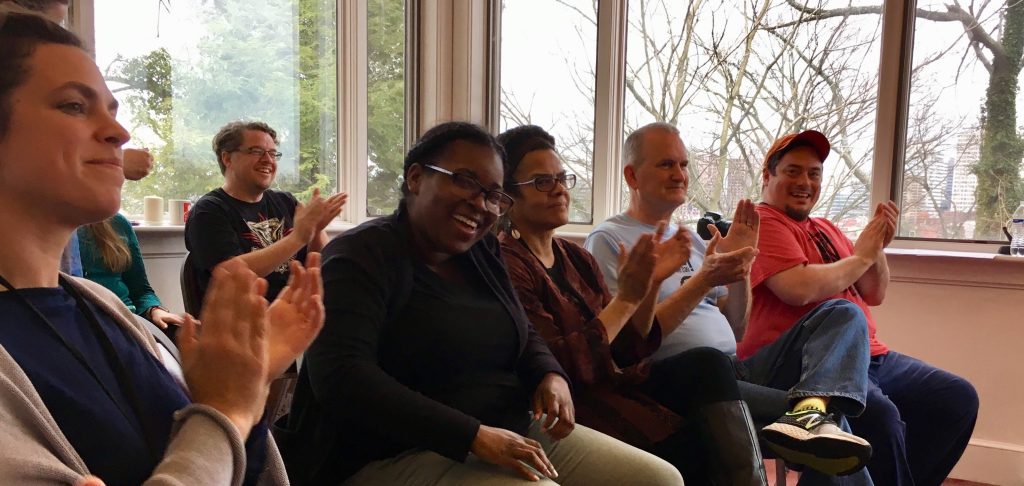
Many polls describe a deeply divided and antagonistic country. The NCHE has conducted regular polls that reveal quite a different reality. “If you plant the seeds, prime the questions, and then ask about those topics, you influence the answers,” says Dr. Christopher. “For instance, if you ask someone, do you believe immigrants are a threat to this country, you’re priming and influencing that conversation… Our poll takes a different approach, using fundamental principles of effective communication to induce more authentic responses.” She reports that over three years, their polls show that “most Americans want us to heal. They want to overcome our legacy of hatred and division and unite as a nation… Our poll reveals the pulse of America: fairness, dignity, and the inalienable rights to life, liberty, and the pursuit of happiness.”
Migration across the Americas is a defining issue of our time. It is reshaping communities from north to south as millions move across borders, escaping violence or extreme poverty, or simply seeking a better future for their families. It brings both promise and strain and provokes heated debate. But we often forget that at least 90% of Americans, north and south, are migrants or the descendants of migrants. This past week I was invited to join an online workshop organized by a new Initiatives of Change Americas Trustbuilding program that aims to “build trust and resilience among migrants and host communities,” with initial activities taking place in Brazil and Uruguay. The 23 participants represented at least eight countries of the Americas. They included two Angolans now living in Brazil. A Canadian told how his parents of Swiss background had escaped from Russia. The lead facilitator had come from Honduras to Uruguay.
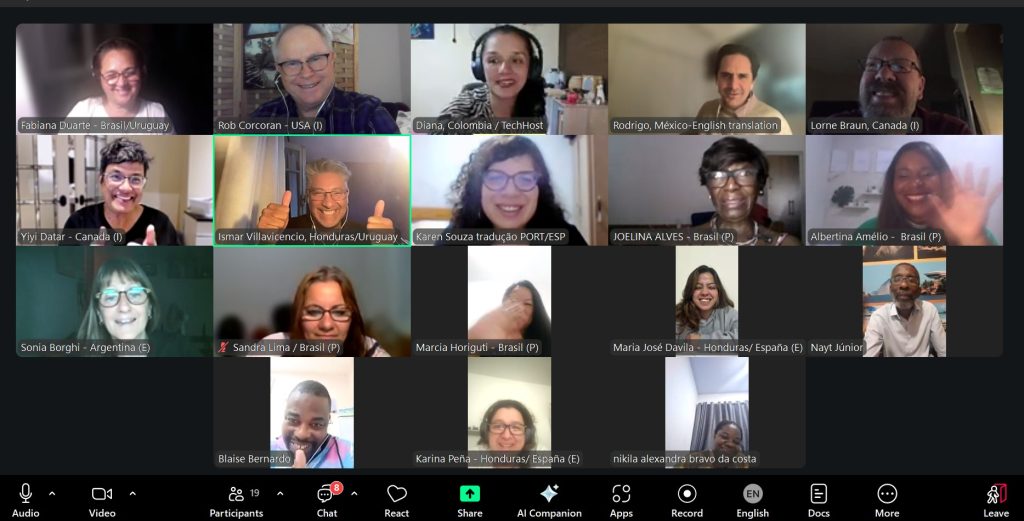
We were invited to share: What were the strongest winds you had to face as a migrant? What kept you on your feet? What are three values, or a skill that you brought from your country of origin? What did you develop here? Thinking about your life as a migrant, what might be your next step? What are your personal goals? Questions like these encouraged rich sharing and building of friendships and teamwork. To learn more about this initiative go to the IofC website
In a recent New York Times column, David Brooks, one of the most thoughtful writers in America today, conducted a conversation with Thomas Friedman, a three-time Pulitzer Prize winning commentator on international issues. Friedman says the two most powerful emotions driving human beings are humiliation and dignity. The quest for dignity and the revulsion of humiliation. He continues, “But the second most important human emotion, I believe, is home. It’s a quest for a home, to be anchored in the world. As my friend Andy Karsner describes it, ‘to be anchored in a community where people are connected, protected and respected.’” People need to feel that they are at home and secure, connected at a human level with those around them.
At this season, it is good to remind ourselves that the Christian gospel is full of stories of individuals who offer hospitality, who welcome the stranger, who overcome their prejudices. Creating space for change is an art in which we are all learners. It requires skills of the head and heart. It may simply mean engaging in conversation with a neighbor. It may mean listening to a story that we find difficult to hear. It may mean learning a new history. It certainly requires making space in our busy lives for regular quiet times for reflection and discernment. We can all live so that our homes and communities become places of welcome, hope and opportunity where the contribution of each person is valued.